What is silver?
Everyone knows what silver is right? But have you ever wondered what the marks on your silver jewellery actually mean?
Understanding Sterling Silver vs. Pure Silver
When buying silver jewellery, might come across terms like “sterling” or “pure” silver. Though they look similar, their composition and performance differ in subtle but important ways.
Pure Silver: 99.9% Silver
Also called fine silver, this metal is:
- Extremely soft: It scratches and bends easily, making it less ideal for everyday jewellery.
- Bright and white in appearance.
Pure silver is preferred for coins, high-end collectibles, or items that won’t undergo heavy wear.
Sterling Silver: 92.5% Silver + 7.5% Other Metals
This alloy—most commonly mixed with copper—is:
- Stronger and more durable: Perfect for rings, chains, and pieces meant to last.
- Slightly less shiny, but still gleams beautifully when polished.
In the UK and many other countries, any silver jewellery over 7.78 grams must be hallmarked—sterling silver included.
Understanding jewellery hallmarks
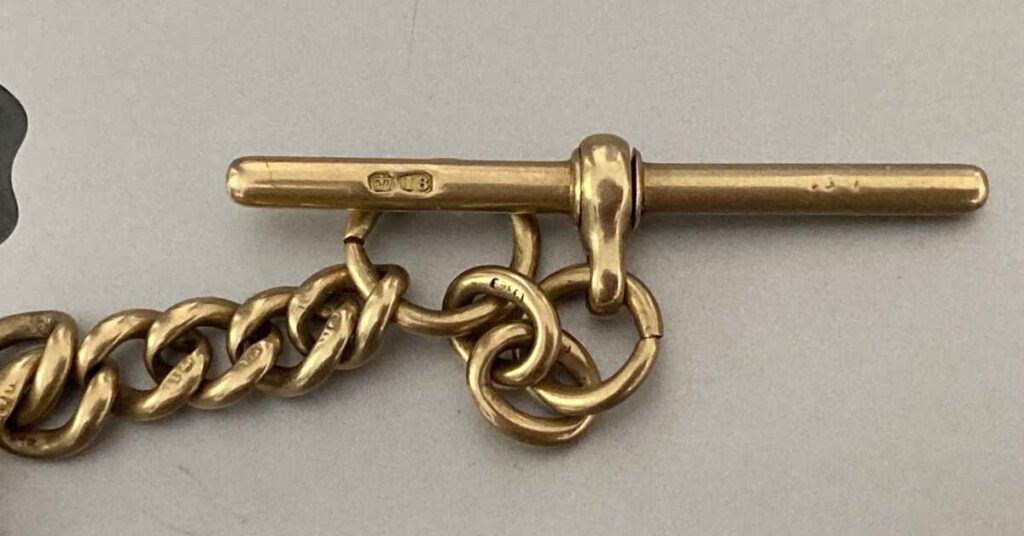
Every piece of precious metal jewellery tells a story – with tiny symbols called hallmarks, a centuries-old British tradition.
What Are Jewellery Hallmarks?
A hallmark is a legal guarantee of a metal’s content and quality, applied by an independent authority. In the UK, it’s not just an option—it’s the law. Any item made from precious metals (like gold, silver, platinum, or palladium) above certain weights must be hallmarked before it can be sold:
| Metal | Minimum Weight for Hallmarking |
| Silver | 7.78 grams |
| Gold | 1.0 gram |
| Platinum | 0.5 gram |
| Palladium | 1.0 gram |
Who can apply a hallmark?
Only a government regulated Assay Office can apply a hallmark:
- London (leopard’s head)
- Birmingham (anchor)
- Sheffield (Yorkshire rose)
- Edinburgh (castle)
These offices test and verify the metal purity of each piece and apply a hallmark consisting of three required symbols:
- Maker’s mark – Who made it – every jeweller creates their own maker’s mark with the assay office.
- Fineness mark – The purity of the metal (e.g., 925 for sterling silver, 999 for pure silver)
- Assay Office mark – Where it was tested
Optional marks might include a date letter (indicating the year), and a traditional fineness symbol (such as a lion for silver).
Example: Decoding Sterling Silver
| Symbol | Meaning |
| “925” | Sterling silver |
| Anchor | Assayed in Birmingham |
| “AB” | Maker’s initials |
| Lion Passant | Traditional symbol for silver |
Pure silver, by contrast, would carry a “999” stamp—but it’s much softer and less ideal for everyday wear.
Why do hallmarks matter?
- Trust & Transparency – Assures buyers of genuine quality
- Education – Teaches you about your jewellery’s origins
- Authentication – Helps date vintage pieces and identify makers
- Legal Protection – Complies with UK laws protecting consumers
Jewellery isn’t just about sparkle—it’s about story. And in the UK, hallmarks are the signature that proves its worth.